

March 2025

This is part of an ongoing series of Covington blogs on the AI policies, executive orders, and other actions of the Trump Administration.  The first blog summarized key actions taken in the first weeks of the Trump Administration, including the revocation of President Biden’s 2023 Executive Order 14110 on the “Safe, Secure, and Trustworthy Development
Since 2020, over 60 bills have been introduced in the Mexican Congress seeking to regulate artificial intelligence (AI). In the absence of general AI legal framework, these bills have sought to regulate a broad range of issues, including governance, education, intellectual property, and data protection. Mexico lacks a comprehensive national strategy or policy on AI.

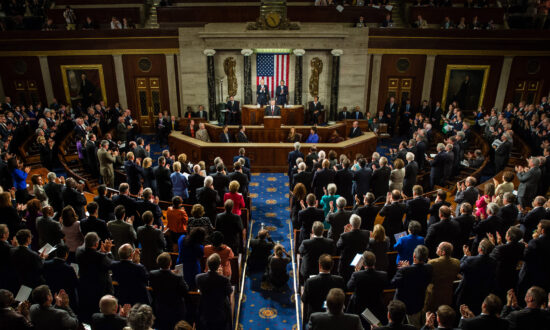
On Tuesday, March 4, 2025, President Trump addressed a joint session of Congress, and highlighted many of the actions his administration has taken during his first six weeks in office.  This timeline highlights key developments pertaining to recent executive orders (“EOs”) and other executive actions issued by the second Trump administration.  It focuses on issues

Court decisions addressing “pen register” claims brought under the California Invasion of Privacy Act (“CIPA”) have started trickling in after last year saw an uptick in these claims targeting businesses’ use of website tools.  Two more California courts recently joined a growing trend dismissing pen register claims, but they did so on new grounds: one

Earlier this month, the House Energy and Commerce Committee released its oversight plan for the 119th Congress. Among other topics, the plan addresses priorities designed to ensure that technology and communications regulations keep pace with innovation, investment, and economic growth. The priorities described include:

  • Updating Communications Regulations. The Committee plans to assess whether outdated, platform-specific

Since taking office, President Trump has issued dozens of executive orders, many addressing key technology policy areas that include international trade and investment, artificial intelligence (AI),  connected vehicles and drones, and trade controls.  Some of these executive actions reverse the previous administration’s efforts on these issues—such as the order revoking President Biden’s October 2023 executive

Recently, three key investigative committees of the House of Representatives—the Oversight and Government Reform CommitteeJudiciary Committee, and Energy and Commerce Committee—each adopted their respective committee’s oversight plan for the new Congress, offering a window into the committees’ investigative priorities for the next two years. The newly adopted oversight plans provide insights

Under the federal Lobbying Disclosure Act (“LDA”), an organization or lobbying firm must register if it employs an individual who meets the definition of a “lobbyist” and if its total expenses or income for lobbying activities meet certain monetary thresholds.  Usually, the two non-monetary thresholds determining when an individual becomes a “lobbyist,” discussed below, are

Tax-exempt organizations, including private foundations and other types of nonprofits associated with high-net worth individuals, have been subject to increasing investigative scrutiny in recent years. Last Congress, for example, the House Judiciary Committee and several other committees issued document requests to multiple nonprofit organizations, and in this Congress the trend is likely to continue. The current administration

On March 5, 2025, the European Commission published the Industrial Action Plan for the European Automotive Sector. This plan outlines measures to strengthen the competitiveness of the European automotive industry and to accelerate the transition to zero-emission mobility in the EU.  This plan is the result of the “Strategic Dialogue” that has been taking