

The California Privacy Protection Agency (“CPPA” or “Agency”) staff has released a package of proposed amendments to the California Consumer Privacy Act (“CCPA”) regulations governing opt-out preference signals (“OOPS”). The proposal would expressly identify the Global Privacy Control (“GPC”) as an example of a signal that businesses selling or sharing personal information must process as
Inside Privacy Blogs
Latest from Inside Privacy
Algorithmic Pricing Laws: A Growing State Patchwork and What Businesses Should Know
Lawmakers and regulators at both the state and federal levels are increasingly focusing on consumer protection considerations relating to algorithmic pricing. On September 25, the Federal Trade Commission (“FTC”) closed the comment period on a proposed enforcement policy statement on personalized pricing. The proposed statement is the FTC’s preliminary view on whether personalized pricing practices
A Comparison of the EU Cloud and AI Development Act Requirements Against the U.S. FOCI Regime and FedRAMP
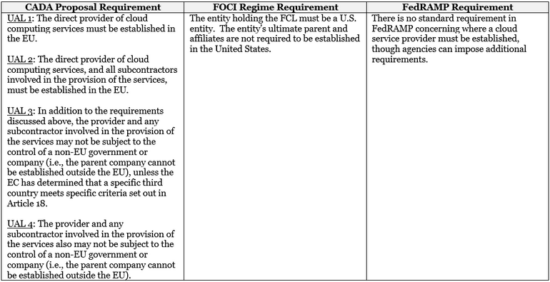
As governments increasingly focus on cloud security and sovereignty, the European Commission (“EC”) is, through its proposal for a Cloud and AI Development Act (“CADA Proposal”), attempting to create a regime establishing “sovereignty” requirements on cloud computing service providers that can be procured by the public sector. In our prior blog post, we discussed
New AI Transparency Requirements Enacted for Advertisers and Deployers
State legislatures have passed new laws focused on disclosing the use of AI in advertisements or depictions of individuals. On September 16, California Governor Gavin Newsom signed SB 1050, a new law requiring disclosures when certain advertisements prominently feature a “synthetic performer.” This was one of several AI-related measures signed by Governor Newsom this
California Enacts New Privacy Legislation Affecting Consumer Rights, Data Brokers, and Website Tracking Litigation
In the final days of California’s 2026 legislative session, California Governor Gavin Newsom signed a series of privacy legislation spanning consumer privacy rights, data broker activities, digital platform design, and civil remedies for website privacy litigation. Governor Newsom also vetoed a privacy measure that would have imposed broad restrictions on the sale and sharing of
CISA Submits Final CIRCIA Rule for OMB Review
On October 1, 2026, the U.S. Cybersecurity and Infrastructure Security Agency (“CISA”) submitted a draft of the Final Rule implementing the Cyber Incident Reporting for Critical Infrastructure Act of 2022 (“CIRCIA”) to the Office of Information and Regulatory Affairs (“OIRA”) for interagency review, marking one of the final steps before the Final Rule will be
Key Takeaways for Private Sector Entities from the FBI’s New Cyber Strategy
On September 9, 2026, the U.S. Federal Bureau of Investigation (“FBI”) announced the publication of the FBI Cyber Strategy (the “Strategy”). The Strategy, which “provides a roadmap for defending the American people and the nation’s critical infrastructure in cyberspace,” is broken into four pillars:
California Enacts Several Minors’ Privacy and Safety Laws
Recently, California Governor Gavin Newsom signed a sweeping set of laws related to minors’ privacy and safety, including new laws that restrict covered platforms from providing certain features to users under 16, impose a duty of care on social media platforms, revise the state’s Age-Appropriate Design Code, modify the state’s age-assurance requirements governing age signals,
California Legislature Advances AI Employment Bills
At the end of August, the California legislature passed three bills that would regulate the use of AI in the employment context. These bills are now on Governor Newsom’s desk, and he has until September 30 to sign or veto. Below is a summary of the three bills.
Connecticut Attorney General Settles with TaxAct Over Sharing Taxpayer Data
On August 19, 2026, Connecticut Attorney General William Tong announced a $275,000 settlement with online tax preparation company TaxAct over allegations that the company improperly disclosed taxpayer information to advertising partners through third-party tracking technologies on its website. The Attorney General alleged that, between January 2018 and December 2022, TaxAct used third-party tracking technologies for